In the ever-evolving landscape of real estate investment, timing has always been the elusive key to unlocking substantial returns. While traditional metrics like market trends, interest rates, and economic indicators remain foundational, a growing number of investors are looking to the cosmos for an additional layer of insight. The concept of an astrological timing chart, or a "star chart" for property investment, is not about replacing sound financial principles but about harmonizing them with cyclical cosmic patterns. This approach posits that planetary movements and alignments can influence collective human behavior, market sentiment, and even the flow of capital, thereby creating windows of opportunity that align with both earthly logic and celestial rhythm.
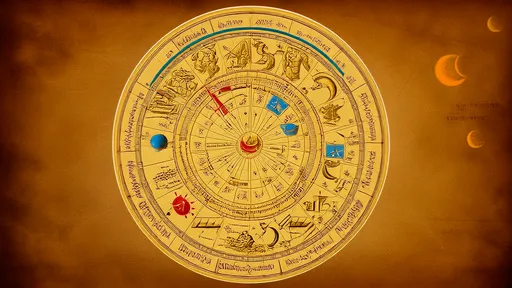
The foundation of using astrological timing in real estate lies in understanding the basic components of an investment horoscope. At its core, it involves casting a chart for the precise moment a decision is to be made—be it the signing of a contract, the closing of a deal, or the groundbreaking of a new development. This chart is a snapshot of the heavens, detailing the positions of the planets, the Sun, and the Moon at that specific time and location. Key elements often analyzed include the condition of the Second House of personal wealth, the Fourth House of property and home, and the Tenth House of career and public reputation. The aspects—or geometric angles—planets make to each other can indicate periods of ease and flow or challenge and obstruction.
For instance, the planet Jupiter, known as the "Greater Benefic," is traditionally associated with expansion, abundance, and good fortune. When Jupiter is strongly placed in a timing chart—perhaps forming a harmonious aspect to Venus, the planet of value and assets, or transiting through the Fourth House—it is often interpreted as a highly favorable period for acquiring property or making significant investments. The energy is one of growth and optimism, which can correlate with a buoyant market mood and increased buyer confidence. Conversely, periods where Saturn, the planet of restriction and structure, is dominant might suggest a time for caution, due diligence, and consolidation rather than aggressive expansion.
Beyond the slow-moving planets, the phases of the Moon play a crucial role in this celestial strategy. The New Moon is universally seen as a time of new beginnings, making it an potent moment to initiate searches, make offers, or start construction projects. It symbolizes planting a seed. The Waxing Moon period, leading up to the Full Moon, is considered ideal for actions that require growth and building momentum, such as negotiations or securing financing. The Full Moon itself often brings clarity and culmination, a good time for closing deals or finalizing plans. Finally, the Waning Moon is a period for review, reflection, and releasing that which no longer serves—perhaps a time to sell a underperforming asset or exit a market.
It is crucial to state that this method is not a crystal ball guaranteeing success. Astrological timing should be viewed as a sophisticated tool for risk assessment and strategic planning, not a substitute for comprehensive market research and financial analysis. An investor would be foolish to purchase a clearly overvalued property in a declining market simply because Jupiter is trine Venus. However, an investor might use a favorable chart to choose the optimal day to close on a well-researched and fundamentally sound investment, potentially enhancing the long-term harmony and success of the venture. It adds a dimension of qualitative timing to the quantitative data.
The practical application requires collaboration with a professional astrologer who specializes in financial or mundane astrology. They can help identify upcoming astrological windows—such as Jupiter entering Taurus (an earth sign associated with material goods and value) or Venus moving direct after a retrograde period. These are periods often marked by a shift in economic energy, potentially leading to more stable or appreciating asset values. An investor might time their market entry to coincide with these broader cycles, or schedule the signing of important documents for a moment when Mercury (communication and contracts) is strong and clear, not retrograde, to minimize misunderstandings and legal hiccups.
Skepticism is a natural and healthy response to such an approach. The financial world is built on data, and astrological timing introduces an element that is not easily quantified. However, its proponents argue that it accounts for the psychological and emotional undercurrents of the market—forces that are very real but notoriously difficult to measure. Mass sentiment, often driven by irrational exuberance or fear, can move markets as powerfully as any interest rate change. Astrology, in this context, becomes a language for understanding these collective psychological cycles and their potential impact on asset prices.
In conclusion, the real estate investment timing chart represents a fascinating synthesis of ancient wisdom and modern strategy. It appeals to those investors who view their portfolio not just as a collection of assets, but as an ecosystem that exists within larger natural and cosmic cycles. By aligning significant financial actions with supportive celestial patterns, the goal is to work with the universe's inherent rhythms rather than against them. This practice demands an open mind, a disciplined approach, and, most importantly, a firm grounding in the unshakable fundamentals of real estate investment. For those willing to explore it, it offers a unique framework for seeking not just profit, but also a more harmonious and intentional path to building wealth.

By /Aug 25, 2025

By /Aug 25, 2025

By /Aug 25, 2025

By /Aug 25, 2025

By /Aug 25, 2025

By /Aug 25, 2025

By /Aug 25, 2025

By /Aug 25, 2025
By /Aug 25, 2025

By /Aug 25, 2025

By /Aug 25, 2025

By /Aug 25, 2025
By /Aug 25, 2025
By /Aug 25, 2025

By /Aug 25, 2025

By /Aug 25, 2025
By /Aug 25, 2025

By /Aug 25, 2025
By /Aug 25, 2025
By /Aug 25, 2025