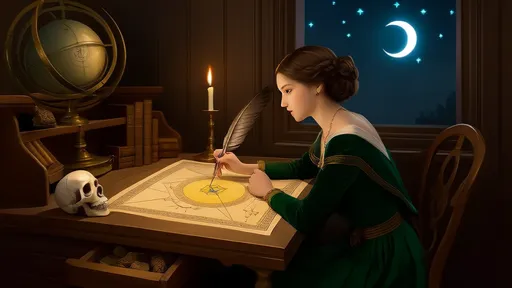
In the quiet hours of the night, when the world sleeps and the stars whisper secrets to those who listen, a profound question often arises in the human heart: what legacy will I leave behind? The urgency of estate planning, a topic often relegated to dry legal documents and financial advisories, takes on a new dimension when viewed through the lens of astrology. This celestial perspective does not merely assign dates or predict outcomes; it invites us to align our earthly preparations with the cosmic rhythms that govern our lives. It is a call to action, not out of fear, but out of a deep reverence for the interconnectedness of all things—past, present, and future.
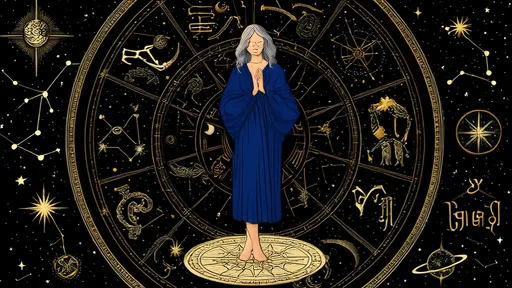
Astrology, in its essence, is the study of how the movements and positions of celestial bodies influence human affairs and natural phenomena. For centuries, civilizations have looked to the stars for guidance, seeking to understand their destinies and the timing of significant life events. When applied to estate planning, astrology offers a unique framework for assessing urgency. It suggests that certain planetary transits and alignments can create windows of opportunity or periods of heightened necessity for addressing matters of legacy and inheritance. This is not about superstition; it is about synchronicity—the art of moving in harmony with the universe’s inherent timing.
Consider the role of Saturn, often referred to as the taskmaster of the zodiac. Saturn’s transit through one’s astrological houses can signal a time of reckoning, responsibility, and maturation. When Saturn aspects key points in an individual’s birth chart, it may indicate a pressing need to solidify one’s affairs. This planetary influence encourages us to face realities we might otherwise avoid, such as the inevitability of mortality and the importance of providing for loved ones after we are gone. It is during these periods that the urgency of estate planning becomes most apparent, not as a burden, but as a sacred duty.
Similarly, eclipses—both solar and lunar—have long been regarded as potent triggers for change and revelation. In astrological tradition, eclipses often bring hidden matters to light, forcing us to confront what we have neglected or overlooked. An eclipse occurring in a sector of the chart related to family, inheritance, or shared resources might serve as a cosmic nudge to update a will, establish a trust, or clarify beneficiary designations. The energy of an eclipse can accelerate timelines, making procrastination feel increasingly untenable. It is as if the universe itself is insisting that we put our houses in order.
Beyond specific transits, the broader astrological climate can also influence collective attitudes toward legacy planning. For instance, when Jupiter, the planet of expansion and abundance, forms favorable aspects with Pluto, the planet of transformation and inheritance, there may be a widespread awakening to the importance of generational wealth and ethical stewardship. Conversely, challenging aspects between Mars and Saturn might correlate with periods of legal disputes or familial tensions over estates, highlighting the consequences of inadequate planning. Astrology thus provides not only personal but also cultural context for understanding why estate planning feels urgently relevant at certain times.
Yet, astrology does not advocate for impulsive action driven by panic. Instead, it emphasizes intentionality and alignment. By consulting one’s birth chart and current transits, an individual can identify opportune moments to initiate estate planning conversations, engage with legal professionals, or review existing documents. This proactive approach transforms urgency from a source of anxiety into a guided process. It is about working with cosmic currents rather than against them, ensuring that decisions are made from a place of clarity and foresight.
The emotional and psychological dimensions of estate planning are also illuminated by astrological insights. The moon, governing emotions and subconscious patterns, can reveal deep-seated fears or attachments that may hinder progress. For example, a person with a prominent moon in the eighth house (associated with inheritance and shared resources) might have complex feelings about wealth distribution or familial obligations. Understanding these underlying dynamics can help address emotional blocks, making the practical steps of estate planning feel more manageable and meaningful.
Moreover, astrology encourages a holistic view of legacy. It reminds us that an estate plan is not merely a set of financial directives; it is a reflection of one’s values, relationships, and spiritual beliefs. The placement of Venus, the planet of love and values, in one’s chart might influence how they wish to allocate resources to support causes or individuals they cherish. The north node, indicating life purpose and karmic lessons, can guide decisions about how to use wealth to foster growth and healing across generations. In this way, astrology infuses estate planning with depth and intentionality, elevating it from a mundane task to a soulful practice.
Of course, skepticism toward astrology persists in modern society, often dismissing it as pseudoscience or mere entertainment. However, one need not believe in the deterministic power of the stars to appreciate the metaphorical and psychological richness astrology offers. The symbols and archetypes of astrology serve as tools for self-reflection, prompting questions that might otherwise go unasked: When do I feel most compelled to secure my legacy? What fears or desires drive my procrastination? How can I align my actions with a greater sense of timing and purpose? These inquiries are valuable regardless of one’s views on celestial influence.
In practical terms, integrating astrological awareness into estate planning might involve tracking planetary cycles and setting intentions during significant transits. It could mean choosing dates for signing important documents when the moon is in a favorable phase or when Mercury (the planet of communication and contracts) is not retrograde, a period often associated with misunderstandings and delays. While these practices may seem esoteric to some, they represent a desire to harmonize human endeavors with natural rhythms—a principle that resonates across many wisdom traditions.
Ultimately, the urgency of estate planning, when viewed through an astrological lens, becomes a dance between the temporal and the eternal. It is an acknowledgment that while we cannot control the exact timing of our departure from this world, we can choose to prepare with wisdom and grace. The stars do not dictate our fate; they offer mirrors for understanding ourselves and the times we inhabit. In heeding their subtle prompts, we honor both our mortal responsibilities and our connection to the cosmos.
As you ponder your own legacy, consider looking beyond the calendar and the clock. Gaze up at the night sky and let the constellations remind you that you are part of a vast, unfolding story. Your estate plan is not just a document; it is a chapter in that story—a testament to the love, care, and foresight you extend to future generations. And perhaps, in aligning your actions with the stars, you will find that urgency transforms into purpose, and planning becomes an act of cosmic harmony.

By /Aug 25, 2025

By /Aug 25, 2025

By /Aug 25, 2025

By /Aug 25, 2025

By /Aug 25, 2025

By /Aug 25, 2025
By /Aug 25, 2025

By /Aug 25, 2025
By /Aug 25, 2025
By /Aug 25, 2025

By /Aug 25, 2025

By /Aug 25, 2025
By /Aug 25, 2025

By /Aug 25, 2025
By /Aug 25, 2025

By /Aug 25, 2025
By /Aug 25, 2025
By /Aug 25, 2025
By /Aug 25, 2025
By /Aug 25, 2025